
Calorie tracking 101: Where to begin
The honest truth first: tracking takes a bit of discipline. But it’s the most reliable method we know of for reaching your nutrition goals long-term — whether you want to lose weight, gain weight, or simply eat more mindfully. And here’s the good news: once you’ve started, tracking comes easily. Getting started is the real hurdle — and that’s exactly what this article is for.
The key points up front
- It’s easiest with packaged foods and home-cooked meals — that’s where you know the nutritional values fairly precisely.
- Packaged foods are logged by scanning the barcode. In the EU, every packaged food must declare its nutritional values in a standardized format.
- Unpackaged foods like fruit, vegetables, or baked goods are logged using established reference values — not exact to the gram, but good enough.
- Quantity matters. A kitchen scale helps at the start — you’ll quickly develop a feel for it.
- Not every quantity is equally important: how much cucumber you eat barely matters. How much oil or butter does.
- You don’t have to weigh everything forever and you don’t have to be perfect every day. The more often you hit your goal, the faster you’ll get there.
Start with the easy stuff
You don’t have to log everything perfectly from day one. Start where it’s easiest: with packaged foods and home-cooked meals. With both, you can determine the nutritional values well — packaged foods have it printed on the label, and when you cook yourself, you know your ingredients.
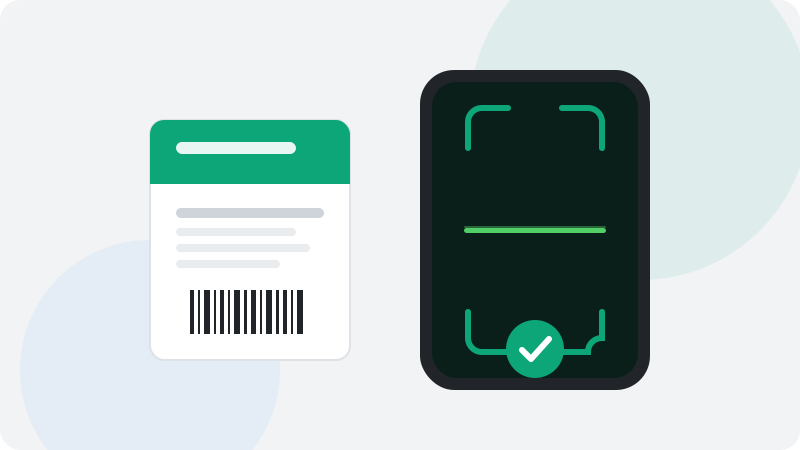
Packaged: just scan the barcode
In the EU, all packaged foods must declare their nutritional values in a standardized format. That makes tracking with an app that can read barcodes about as easy as it gets: scan, type in the amount, done.
If a product isn’t in the app yet, that’s no problem. With nærwert you can simply scan the nutrition label with a photo and add it to the database. Next time, the product will already be there — for you and for everyone else.
Unpackaged: solid reference values, not false precision
For unpackaged foods like fruit, vegetables, or baked goods, there are established reference values — in Germany, for example, in the Bundeslebensmittelschlüssel (BLS), the national food composition database. These values aren’t exact to the gram for every single banana or bread roll, but they’re good enough to reliably reach your nutrition goals.
Don’t let that little bit of fuzziness put you off. Tracking doesn’t have to be exact to the calorie to work — it just has to be right on average.
What else counts: quantity
Whether packaged or unpackaged, the second thing that counts is quantity. And here, a kitchen scale helps the most.
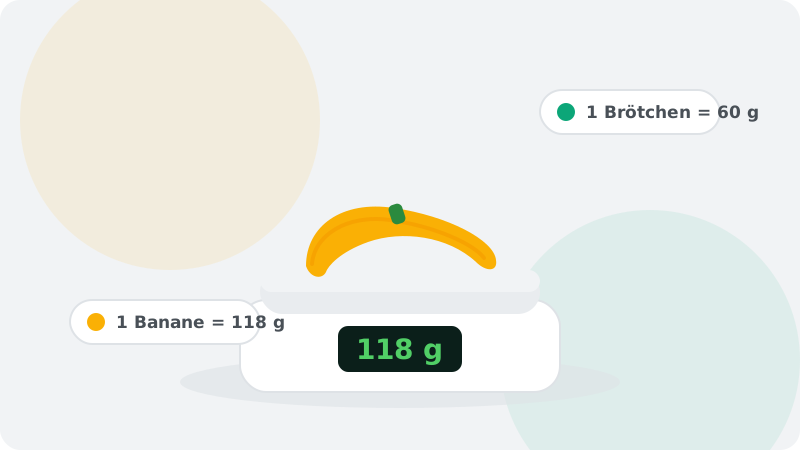
Granted: at the start, weighing food is a bit tedious and unfamiliar. “How much does a slice of sausage or cheese actually weigh?” nærwert tries to make this easier by having common weight estimates — like a large banana or a bread roll — already stored in the app.
The good part: you develop a feel for quantities very quickly. After just a few weeks you’ll estimate surprisingly well, and you’ll notice which quantities actually matter. How much cucumber you eat, for example, is far less relevant than how much oil or butter is on your food. A fresh salad with too much oily dressing can quickly have as many calories as a kebab.
And eating out?
Restaurant chains increasingly provide nutritional information for their products. At smaller restaurants, it’s often difficult. For common fast food like kebabs or pizza, we’ve at least stored approximate values — but honestly: these stay estimates.
That’s also one reason why people who successfully lose weight or build muscle tend to lean toward home cooking or packaged foods: it’s simply easier to log accurately. Eating out now and then is perfectly fine — just be aware that the numbers are less precise.
A goal with a tangible timeframe
None of this means you now have to weigh everything forever and never eat out again. Quite the opposite.
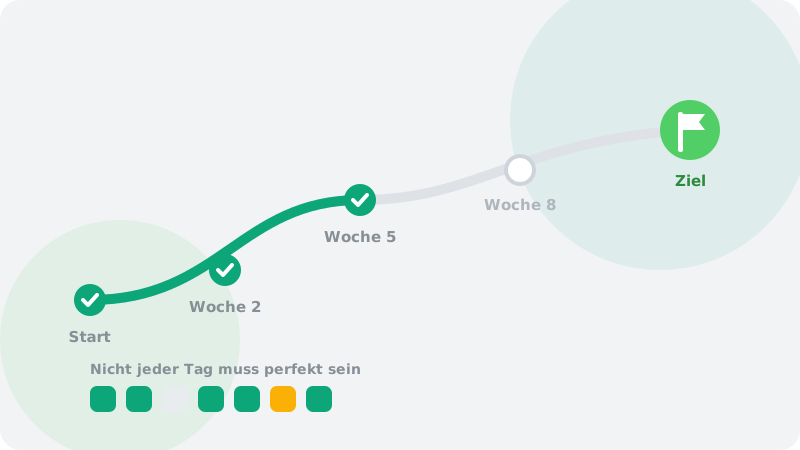
nærwert can tell you roughly how many weeks you’ll need to reach your weight goal. That turns a vague “someday” into a tangible goal within a manageable timeframe.
And here’s the most important point: the more often you stay within your calorie goal, the faster you’ll reach it. But that doesn’t mean every day has to be perfect. A day that goes off track might cost you a little time — it won’t throw you back to zero. Discipline here only decides whether you take a little longer or a little less.
In summary
- Start with the easy stuff: scan packaged foods by barcode, log home-cooked meals via your ingredients.
- Unpackaged foods work via reference values — not perfect, but good enough.
- Watch the quantity, especially for calorie-dense things like oil and butter. The kitchen scale helps at the start; the feel comes on its own.
- Eating out is okay — just less precise. If you want accuracy, you’ll tend to cook yourself.
- You don’t need perfect tracking, you need consistent tracking. The more often you hit your goal, the faster you’re there.
nærwert wants to help you reach your nutrition goals — as easily as possible. No one has to be 100% perfect. Everyone has a life: family, friends, a meal with the people who matter. That should stay that way. All that matters is that you reach your goal — depending on your discipline, it just takes a little sooner or a little later.
The first step takes the most effort. Once it’s done, we’ll make the rest as easy as we can. So: just start.